Thursday, April 18, 2013

Mount Cook National Park

Mt. Cook as seen from the one of the main roads on the south island.
 
The Southern Alps run through the length of the park.

Vegetation changes due to altitude are easily seen largely thanks to the steep slopes of the park.

Gorgeous bridges line a lot of the paths along the national park.

A vew of man and nature as one.  Along the main road to the base of Hooker glacier.

Hooker glacier and Mt. Cook as seen from the end of the Hooker Valley hike.

The Tasman glacier extends straight to a lake and is well seen from the hiking path.

Massive glacier chunks float on the lake of Tasman glacier. 

You can take a boat around the lake to get up close and personal with these broken off ice pieces.

 
    New Zealand has some of the most beautiful scenery in the entire world.  The Lord of the Rings was filmed here for a reason: beautiful and dramatic landscape.  Some of the most impressive of that New Zealand scenery are the Southern Alps running along the west side of the southern island, and some of the most impressive sections of those Southern Alps lie in Mt. Cook National Park.
                Nestled halfway up the south island, the park is home to the tallest peak in all of New Zealand (Mt. Cook, 12,313 feet) and the longest glacier (Tasman glacier, 17 miles).  The mountains and glaciers are so large that they can be seen from the main highway over fifty miles away.  Aside from those facts, the park has dramatic cliffs and glaciers all everywhere.  There are several hikes in the area showcasing the gorgeous alpine plants and birds.  One hike featured several mountain parrots that we saw at the terminus. 
                There are scenic flights, star gazing, mountain biking, and even boat rides that skim close to the large chunks of the Tasman glacier now sitting in the lake.  The best and most common activity is hiking the Hooker valley and trail up to the Tasman glacier.  With the outdoor recreation and long distance from civilization, Mount Cook National Park is one of fourteen national parks that tourists flock to every year for their dramatic beauty.

Friday, March 29, 2013

The Australia Zoo

A sculpture of Steve Irwin's family greets you as you enter the main gate. 
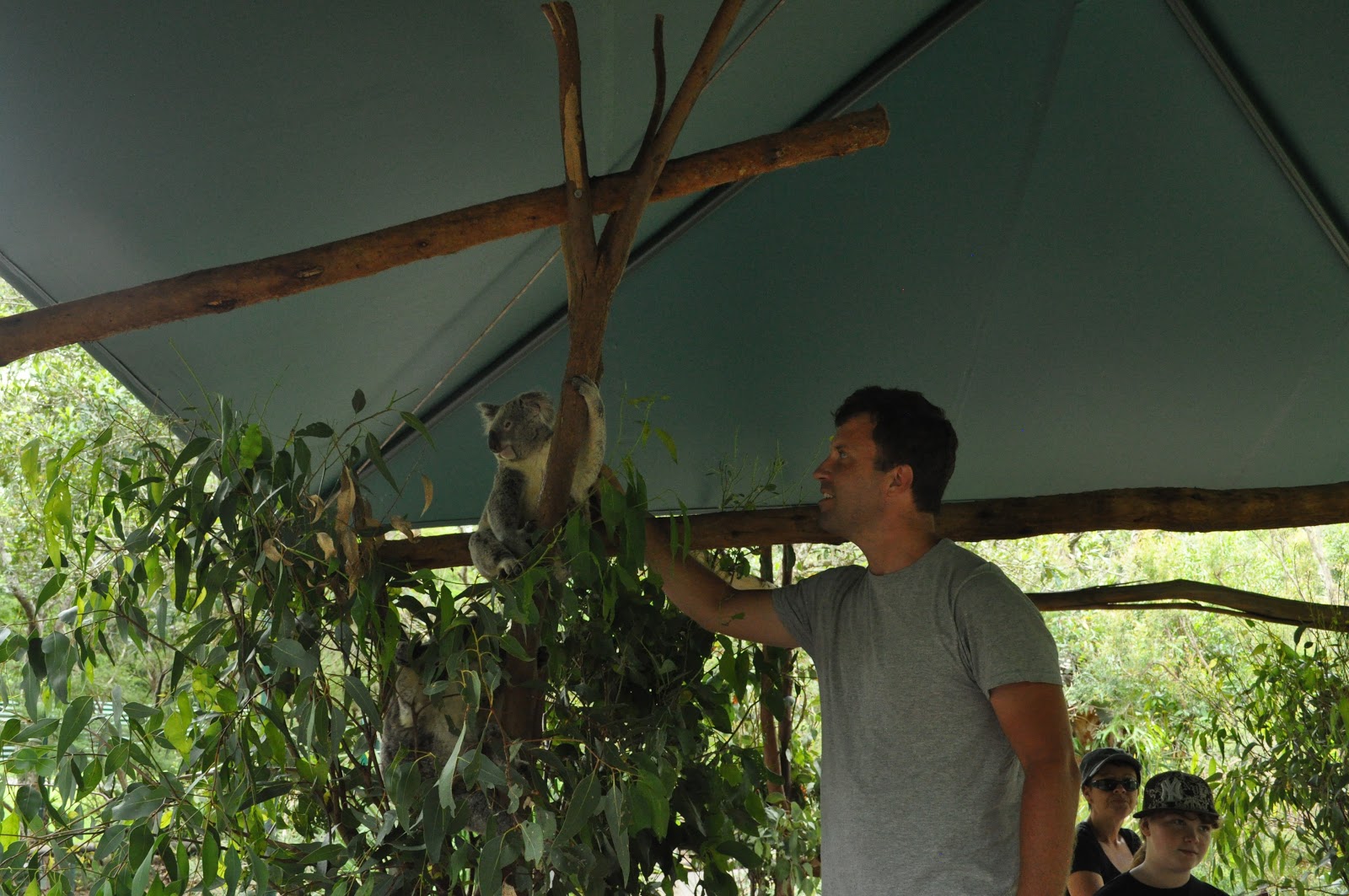
There are plenty of photo opportunities with animals here, but by far the most popular one is to take a photo with a koala bear.
A zoo worker takes a wombat out for a daily walk. 
The Crocoseum is a large stadium showcasing crocodiles in freshwater ponds.  Shows there also exhibit other animals, especially birds. 
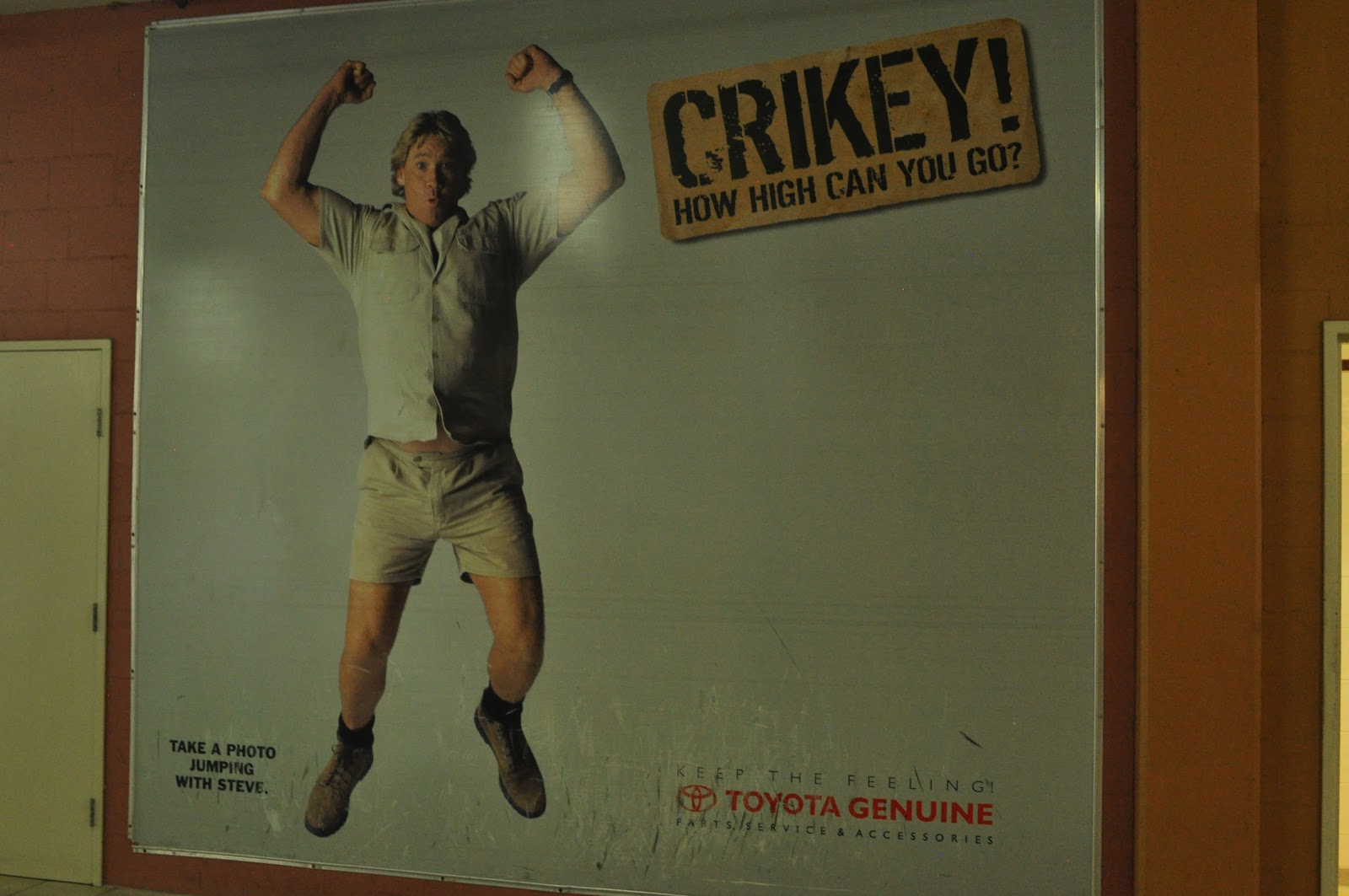
Steve Irwin's image in ubiquitous at the zoo.
You can walk around in an open environment and touch koalas at the Koala Walkthrough. 
There are plenty of lizards to touch.
Of course, the focus of the Australia Zoo is crocodiles. 
The zoo grounds are immaculate and gorgeous. 
You can hold an alligator if you're up for it!

One of the most iconic Australians of the past twenty years in American TV culture has been the crocodile hunter, Steve Irwin, of Australia.  People know him for capturing crocodiles, handling very poisonous snakes, doing crazy dangerous stunts, and his untimely death by a stingray barb off the coast of Australia.  What people didn’t know about him was that his life was directed at expanding and preserving a wildlife park an hour north of Brisbane called the Australia Zoo. 
The Australia Zoo was opened in 1970 by Steve Irwin’s parents and initially called the Beerwah Reptile Park.  Upon opening, the site was only about the size of an acre.  As time progressed the park would expand and gain funding due to Steve Irwin’s profits from The Crocodile Hunter television series.  Today the zoo is over 100 acres and there are potential plans to expand the area to over 1,000 acres.  The zoo is now a major tourist destination and a premier park for conservation thanks to Steve Irwin’s desire to turn the zoo into an information/preservation/interaction area. 
Some of the highlights of the zoo include a 5,000 seat “Crocoseum” where shows are conducted highlighting birds, snakes, reptiles, and (of course) crocodiles, a $5 million wildlife hospital was built a few years ago making it one of the best animal hospitals in the world, and extensive exhibits including walkthroughs where you can pet kangaroos and koalas.  Tourists can even pay to interact and take pictures with almost any animal in the park.  The grounds are spotless and the zoo is one of the most impressive parks you’ll visit, but the highlight is seeing the preservation work and the belief in Steve Irwin’s vision.   

Monday, March 18, 2013

Indonesia's Hindu temples and history

A view of Prambanan, the largest Hindu temple in Java.
Some of the high relief religious sculptures at Prambanan. 
The terraces leading up to the top of the massive Borobudur temple.
Stupas line the top of the Borobudur temple and are the iconic image of Buddhism here.  While there may be Hindu influence and built under the reign of a Hindu kingdom, Borobudur is ultimately a buddhist temple. 
Borobudur sits outside the city of Yogyakarta and amidst a fantastic valley surrounded by tropical mountains.  The stupas outline is easily seen even at daybreak. 
Hindu temples are abundant in Bali.  This temple is outside the cultural city of Ubud in central Bali. 
Part of the highlight in visiting an Indonesian Hindu temple are the great relief sculptures everywhere. 
Arguably the most visited Hindu temple is the Pura Tanah Lot in southwest Bali.  Located on the water, the temple can have amazing photo opportunities at sunset and is relatively close to the main population centers of southern Bali.   


Indonesia is known as the largest Muslim nation on earth.  The country is the fourth most populous with 240 million people, and 87% of those citizens officially identifying themselves as Muslim (Indonesians are legally required to register with one of the six state sponsored religions).  However, at only 2% the Hindu religion is still a force and great reminder of the history and culture in Indonesia. 
Hinduism came to the archipelago islands nearly 2,000 years ago via the traders of India.  As the conventional wisdom of power and trade for Indonesia was that he who controls the Melaka strip (the section of sea between the island of Sumatra and peninsular Malaysia) controls the archipelago.  Traders came from India and brought the influence of Hinduism that would last from the time of Christ up until the 1500s.  This era brought about great temples such as Borobudur and Prambanan (both built in the 9th century) and created one of the most powerful empires in Southeast Asia’s history.  The last great Hindu empire in Indonesia, the Majapahit, slowly lost control of Sumatra and the Melaka straight to a growing influence of Islam from India.  The Majapahit fled to the island of Bali where their influence is easily seen today.  While Hinduism and their great empire fell to Islam and other outside influences, they still hold a political power and context in modern Indonesia.
The tourism island of Bali practices Hinduism in a different context from the rest of the world.  Their temples have a much larger open space that is protected by concentric gates rather than a main door to an enclosed building.  Nearly every community has a temple and regardless of religious practice, every Balian belongs to a particular temple.  Furthermore, Balians focus on more spirits and “animists” beliefs than traditional Islam, and have a particular affinity for the atheistic aspects of their religion via sculptures and paintings.  This last point is probably a large contributing factor in why tourists come to Bali for cultural reasons (the beaches, surf, and parties are already well known there).  Traveling around several islands gives a much larger cultural understanding of the different practices of religion on this very populous country. 

Wednesday, February 27, 2013

Malaysian and Singaporean foods

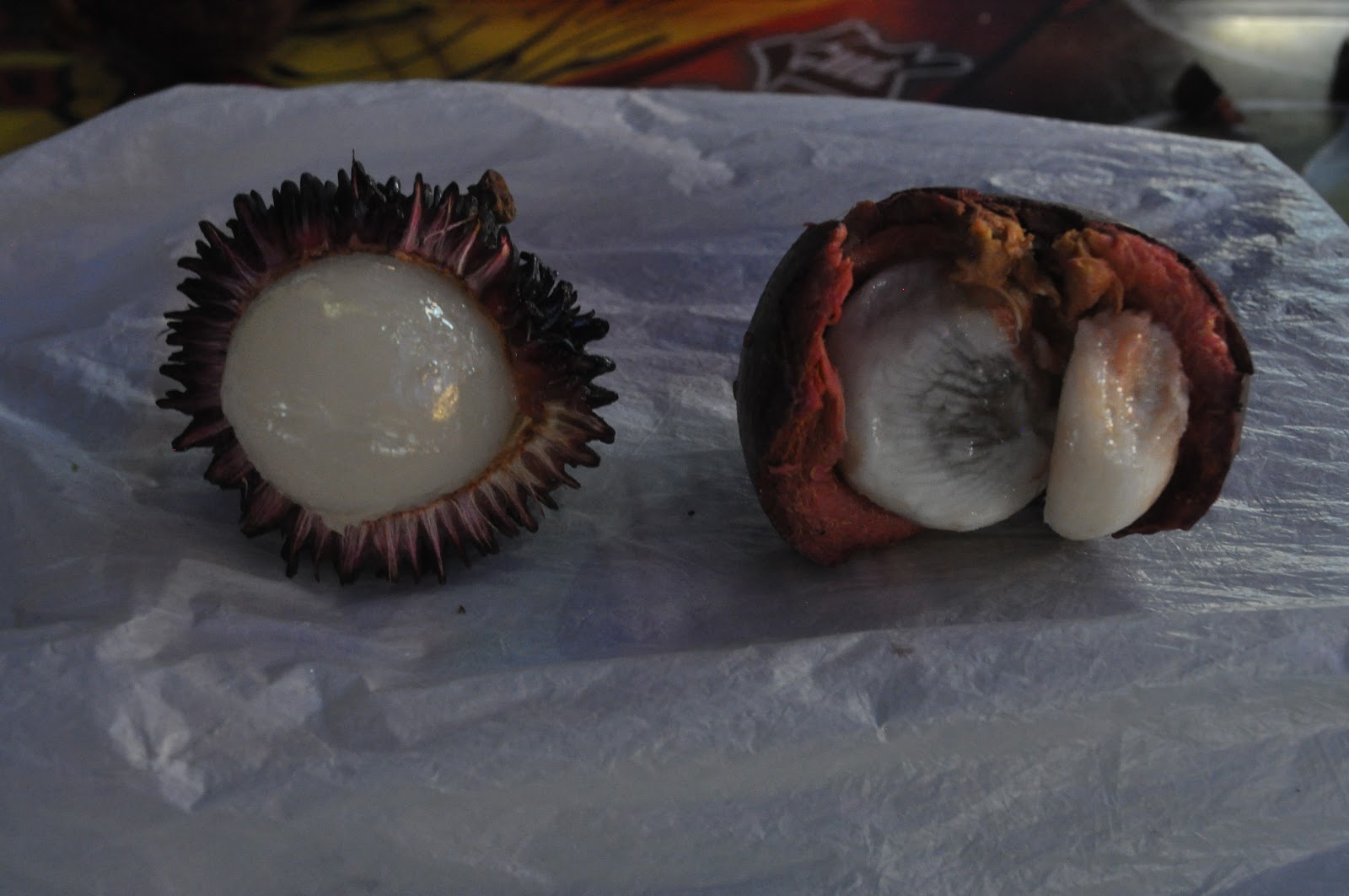
The rambutan (left) and mangosteen (right) are two of the exotic fruits of Southeast Asia. So what do they look like on the inside?
Inside the rambutan (left) and mangosteen (right), which have a decent amount of seeds and taste quite similar.

The coconut milk drank straight from the coconut is popular throughout Southeast Asia. 
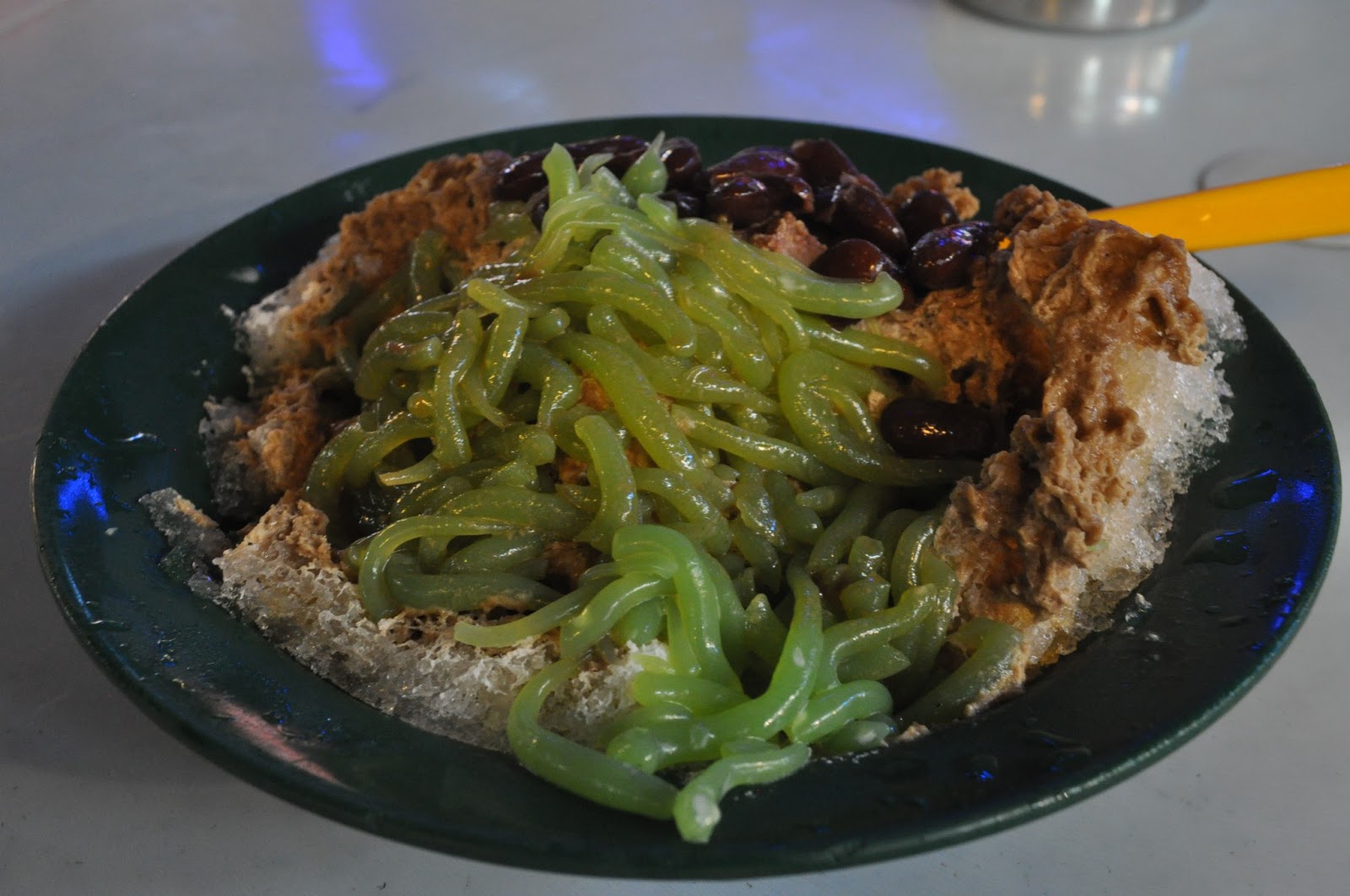
Cendol is a concoction of green pea flour, beans, and brown sugar on top of crushed ice.  It looks gross but is actually quite good.
The very smelly durian fruit is popular throughout Southeast Asia but is also not allowed on the subways and in hotels due to its pungent aroma.
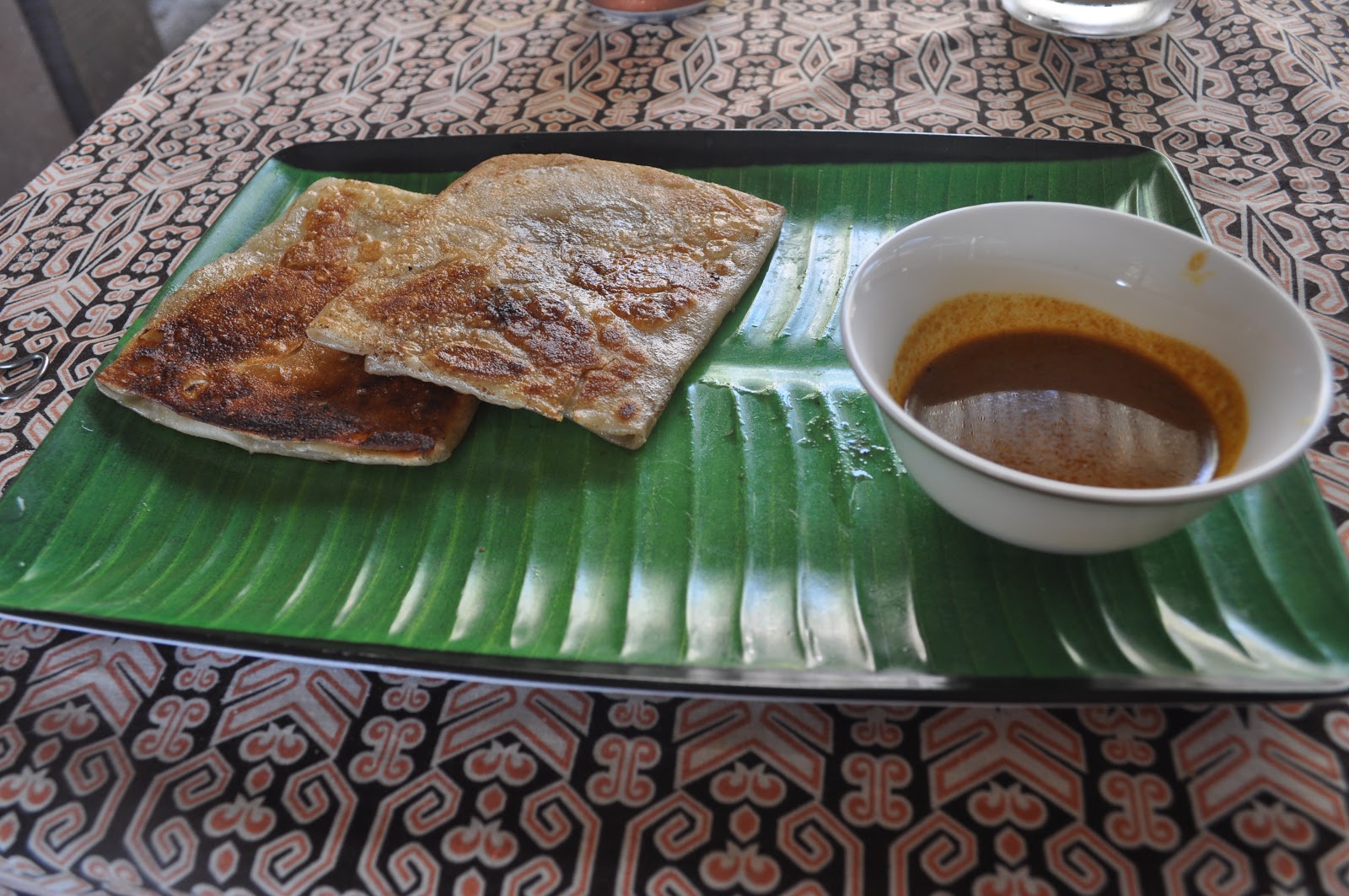
The Indian roti canai is similar to naan but is thicker and comes with spices or an assortment of different add-ons.
A spicy seafood laksa has veggies and long, circular rice noodles in a pho-style soup.
The stir fried concotion of flat noodles, greens, and seafood make seafood kway teow a bit spicy and really tasty.
The mango shake is surprisingly not sweet and really good. 


Malaysia and Singapore are a fusion of the Chinese, Indian, and Indonesian cultures.  Walk around these countries and you’ll see mosques, churches, and temples next to each other.  Look at the people and you’ll hardly see a traditional “look,” they come from all over Asia and speak different languages.  Singapore has four official languages: English, Mandarin, Tamil, and Malay.
So what do you get when you have a massive infusion of cultures?  Great food.  Singapore and Malaysia (particularly the northwest island of Penang) are famous for it.  Traveling around here requires you try the various amounts of food.  In the two weeks I was on the Malaysian peninsula I tried to eat as much noodle-rice-soup-fruit mixtures as possible.  The pictures above are a sampling of those famous foods found there.
Note:  The words in bold lettering indicate the traditional name of the food.


Friday, February 15, 2013

Thailand's islands


A view of the Ao Chalok Ban Kao bay in southern Ko Tao.
Coming back to the northern shores of Ko Phangan after a day of diving.
One of the many rocks jutting out of the sea near Ko Phi Phi.
Monkeys are fierce along Monkey Beach in southern Ko Phi Phi.
Firedancers are prevelant in Thailand, and these dancers gave us a private show in a cove on Ko Phi Phi.
With all the cliffs on Ko Phi Phi there has to be some rock climbing and cliff jumping.
Sail Rock is the best dive site in the Gulf of Thailand but takes a bit of a drive.  There's potential to see whale sharks and huge schools of fish. 
Maya Bay is a gorgeous beach on Ko Phi Phi Leh and the filming site of the movie "The Beach."
A view from my hostel on Long Beach, Ko Phi Phi, which sits away from the throngs of tourists in Tonsai Village.
The red box in the top right contains the famous Gulf of Thailand islands of Ko Tao, Ko Phangan, and Ko Samui. A smaller red box in the bottom left houses Adaman Sea islands Ko Phi Phi, Ko Lanta, and Phuket.

The most well traveled section of Southeast Asia is Thailand.  Temples in the north, Bangkok, and tropical islands in the south are an exotic locale and give enough interest for over 20 million visitors to come to Thailand in 2012.  While people recall the glory of “Hangover 2” in Bangkok or see the jungles of Chang Mai, nearly every tourist ends up in the southern islands.  These tropical islands and beaches are separated by the Gulf of Thailand islands in the east (mainly Ko Tao, Ko Phangan, Ko Samui, and Ko Samet) and the Andaman Sea islands in the west (Ko Phi Phi, Ko Lanta, Similan Islands).
There are three main things to do on the islands: party, beach, and dive. 

1.     Party:  Ko Phangan is home to the world famous full moon and half moon parties on the southern section of the island.  Ko Phi Phi’s main center comes alive at night with fire dancers, a fire limbo competition, fire jump ropes, and amateur boxing where you can get free drinks for a couple rounds in the ring.  Ko Tao has bars and happy hours all along the island. 

2.     Beach:  Where to start?  Ko Tao has Sairee Beach in the west and several smaller coves along the island.  Ko Phangan’s famous beach houses the full moon party on the very southern end of the island.  Chaweng holds a long, sandy beach on Ko Samui.  Several different turquoise water beaches line Ko Phi Phi’s coast.  Ko Lanta is basically one long beach.

3.     Dive:  Ko Tao is home to the most dive shops in the world and conducts more open water PADI dive courses than anywhere else on earth.  Ko Phangan is near Sail Rock’s coral sections and large amount of underwater life.  Ko Phi Phi has tons of dive sites with excellent visibility.  There is almost no off season in Thailand which guarantees quality diving year round.

Other activities include elephant treks, sea kayaking, snorkeling, hiking, rock climbing, BBQs, and a full Wipeout course.  If none of this is of interest then you can lounge in the beaches or several of the top end resorts.  While there is a general mystique that Thailand is super cheap, it shouldn’t be expected that you’ll be living off nothing.  While way cheaper than Hawaii, Thailand is still more expensive than the surround Southeast Asian countries.  It’s easily accessible from Bangkok or Krabi and a highly recommended place for tropical island tourism.  

Sunday, February 3, 2013

Myanmar (Burma)

Monks pray and study at the Kha Khat Wain Kyaung monastery in Bago.
One of the largest (if  not the largest) Buddhist stupa at Shwemawdaw Paya in Bago. 
Burmese pray at the Shwedagon Paya in Yangon.
The entrance of the Ananda Ok Kyaung temple sits at the center of Old Bagan in northern Myanmar.
A Buddhist monk takes pictures with his iPad on top of the Shwesandaw Paya in central Bagan.
Novice monks walk around the massive golden temple in the center of Old Bagan.
Ancient temples litter the landscape of Bagan. 
A girl sells food at a village outside of Mandalay.  The yellow on her face is a sunblock worn by nearly all Burmese every day, but has ceremonial implications too. 
I got to hold a 6-7 foot Burmese python in a village outside of Mandalay. 
An ancient palace sits near an old dirt road in the soporific town of Inwa. 
The underside of the beautiful teak bridge in Amarapura.
Sunset comes to the gorgeous and longest teak bridge in the world in Amarapura, a village outside of Mandalay. 
Two classic temple styles sit at the southern end of Bagan.

The poorest country in Southeast Asia (with the possible exception of East Timor), and one of the poorest countries in all of Asia is Burma.  Famous for major human rights abuses, military rule, Aung San Suu Kyi’s Nobel Prize, and corruption, Burma is emerging as a new player in Southeast Asia after the 2010 elections.  However, it didn’t start this way for the Burmese.  After independence from British colonization, Myanmar was one of the richest and educated countries in the region.  The 1962 military coup resulted in a socialist government that slowly led Burma down a path of economic disintegration ultimately resulting in riots throughout the country.  Once the cost of petrol spiked in 1988, protests emerged so widely that reforms were taken such as the 1989 election.  These pro-democratic moves would be for naught once the election results revealed a massive loss of power for the military, so the ruling military government refused the ceding of power and continued on as per usual.  A true changing of the guard wasn’t seen until the 2010 elections (Aung San Suu Kyi and her political party did not participate) whereby democratic reforms were seen but still allow the military a large amount of power.  Nevertheless, Burma has slowly stepped back on the world’s stage as evidenced by Barack Obama’s November 2012 visit and the country’s position as Association of Southeast Asian Nations (ASEAN) chair in 2014.  There are bright hopes for the future, but Burma still has a long way to go.  Major suppression of the Rakhine state riots (western Burma near the Bangladesh border), civil conflict in the Kachin state (independence movement juntas fighting the government near the Chinese border), and a non-existent help to the citizens in the 2008 Cyclone Nargis disaster lead to 200,000 people dead in southern Myanmar.
Poverty and major sanctions are evidenced everywhere from the large exposed diesel engines rumbling through the street to a lack of products from outside Burma.  Education has slowly gone downhill in the last fifty years.  Proof of declining education is shown with older Burmese having a much better grasp of English than younger Burmese, whereby nearly every other country in the world has a younger population speaking English substantially better than the older generation.  Transport is poor and roads can be rough, and market lifestyles largely seen in Africa are everywhere in rural and urban areas.  Electrical brownouts are highly common and it is much more difficult to find necessities (such as bottled water) versus the rest of Southeast Asia.
This doesn’t take away from the charm of the Burmese people.  While I’ve been told that interaction between Burmese and tourists is highly regulated, I still find them to be some of the most hospitable and upbeat people I’ve ever encountered.  Relative to the rest of Southeast Asia and developing nations, begging is quite uncommon (Buddhism shuns begging).  The people seem to be genuinely interested in tourists and are very helpful.  The tradition towards women is much more in the style of Indian culture (example: men shouldn’t touch women and showing discretion in the presence of women), men dress much more Indian in style (sarongs), and food seems to share a lot of tradition with Indian and Chinese cultures. 
While tourism is emerging, it is still in a nascent stage and can be difficult to find accommodation, especially in Bagan.  With no credit card reservations or ATMs, tourists have to haul in all their money for their stay and have to try the old show up and see what happens method much of the time.  That being said, Burma has some well worth visiting areas.  Bagan has some of the best preserved Buddhist temples ranging from the 11th to 13th centuries AD.  Inle Lake and Kalaw are popular trekking destinations.  Yangon’s Shwedagon Paya is an impressive demonstration in Buddhism architecture.  Kyaiktiyo has a gravity defying rock doubling as a golden pagoda.  Also, the weather is more temperate and has much lower levels of humidity relative to the rest of the region.  Ultimately it’s worth a peek into a country that is charming and changing, and I recommend you see a beautiful place that will take you out of your comfort zone and simultaneously see a society and culture unlike the rest of Asia.